
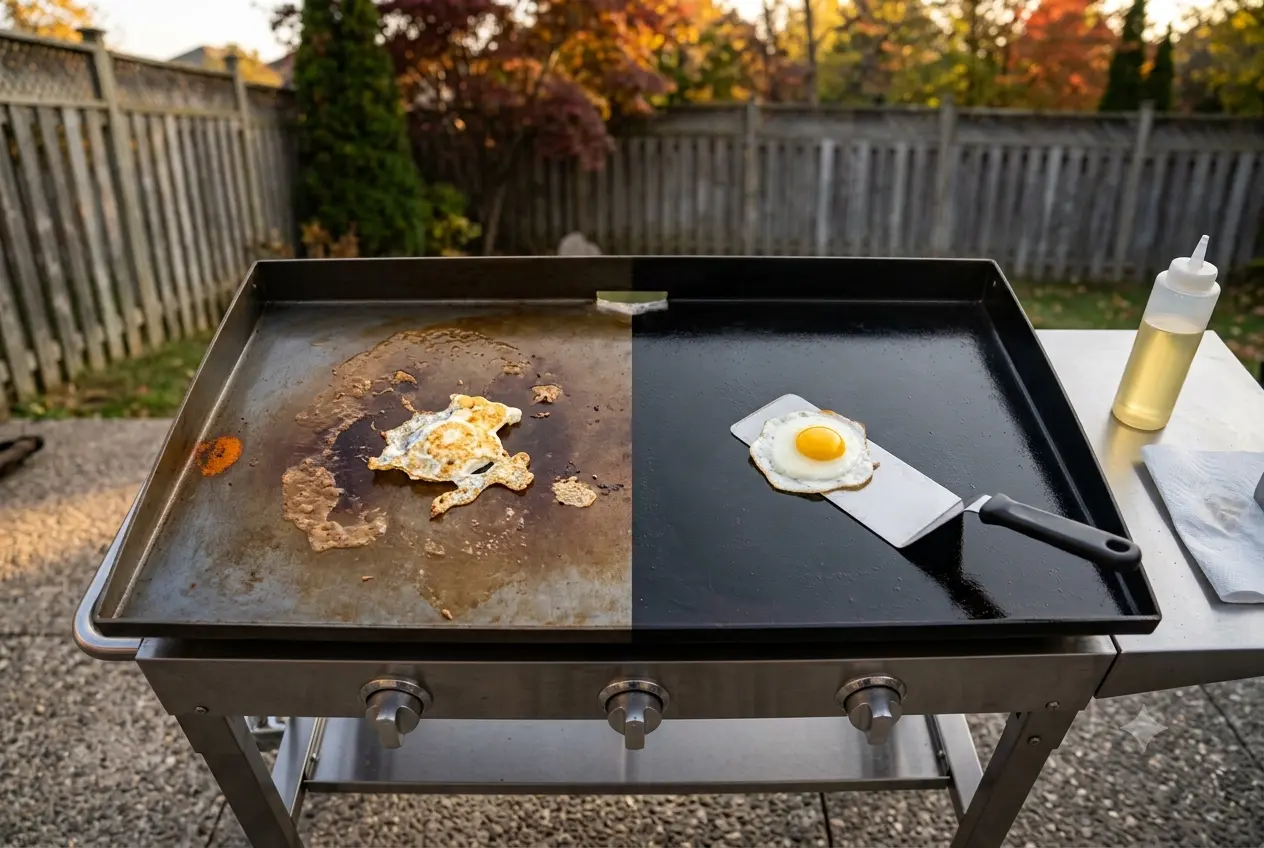
You seasoned the griddle, and eggs still weld to the steel. The fix is rarely a new oil or a new griddle. Almost every sticky Blackstone traces back to a handful of Blackstone seasoning mistakes, and every one of them can be undone in an afternoon.
Food sticks to a seasoned Blackstone for two main reasons: the oil went on too thick, or the heat came off before each coat stopped smoking. Both leave a soft, tacky film instead of hard seasoning. Heat the top on high for 10 to 15 minutes, scrape off the gummy oil, then re-season with 2 to 3 tablespoons per coat until the smoke stops.
What does a sticky Blackstone actually mean?
A sticky or tacky surface means the oil has not fully bonded to the steel. High heat breaks the oil down and bonds it to the metal as a hard polymer layer. When that process stops halfway, you get a soft film that grabs food instead of releasing it.
Use this table to match what you see to the likely cause before you change anything.
| What you see | Likely cause | Go to |
|---|---|---|
| Tacky, gummy or brownish film | Too much oil, or heat turned off too soon | Mistakes 1 and 2 |
| Flakes or peeling patches | Thick coats stacked before each one cured | Mistake 1 |
| Even colour in the middle, pale edges | Edges get less burner heat (normal at first) | Mistake 6 |
| Orange or rough spots | Moisture sat on bare steel | Mistakes 7, 8 and 9 |
| Food sticks only on cold or windy days | Plate never reached full temperature | Mistake 5 |
The 9 Blackstone seasoning mistakes that make food stick
1. Putting the oil on too thick
Thick oil is the number one cause of a sticky Blackstone after seasoning. Blackstone’s manual calls for 2 to 3 tablespoons per coat, spread thin and even with a paper towel held in tongs, and notes that the thinner the layer, the easier it burns off. A heavy pour pools, half-cures and stays soft.
If a coat looks wet and shiny after you spread it, wipe more off. It should look almost dry. Stacking thick coats is also what leads to Blackstone seasoning flaking later, because each soft layer never bonds properly to the one below.
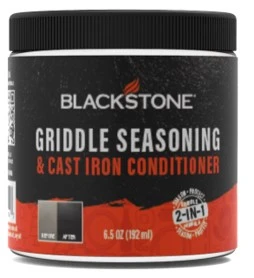
KS stocks the Blackstone griddle seasoning and cast iron conditioner, which the manual names as its preferred option. Any food-grade cooking oil also works if it goes on thin.
2. Turning off the heat before the smoke stops
Each coat is done when it stops smoking, not when a timer goes off. Blackstone’s manual uses that as the signal and recommends 3 to 4 coats for the first seasoning. Shut the burners off while a coat is still smoking and you lock in a partially cured layer that stays tacky.
The manual’s troubleshooting section lists “too much oil” and “heat turned off too soon” as the two causes of a surface that is not black and food that sticks. Mistakes 1 and 2 cover most sticky griddles on their own.
3. Using bacon as the first seasoning
Cooking bacon on a bare griddle is not the same as seasoning it. Blackstone’s manual says directly not to use bacon if you season with animal fat, because of what bacon contains beyond fat. Pure lard works; bacon does not. Season first with oil or conditioner, then cook all the bacon you want.
4. Using soap after the first wash
Soap belongs on a Blackstone exactly once. The manual says to wash a new griddle top with hot, soapy water to remove the shipping coating, and that this is the only time soap should touch the cooking surface. After that, soap strips seasoning and leaves bare patches that grab food.
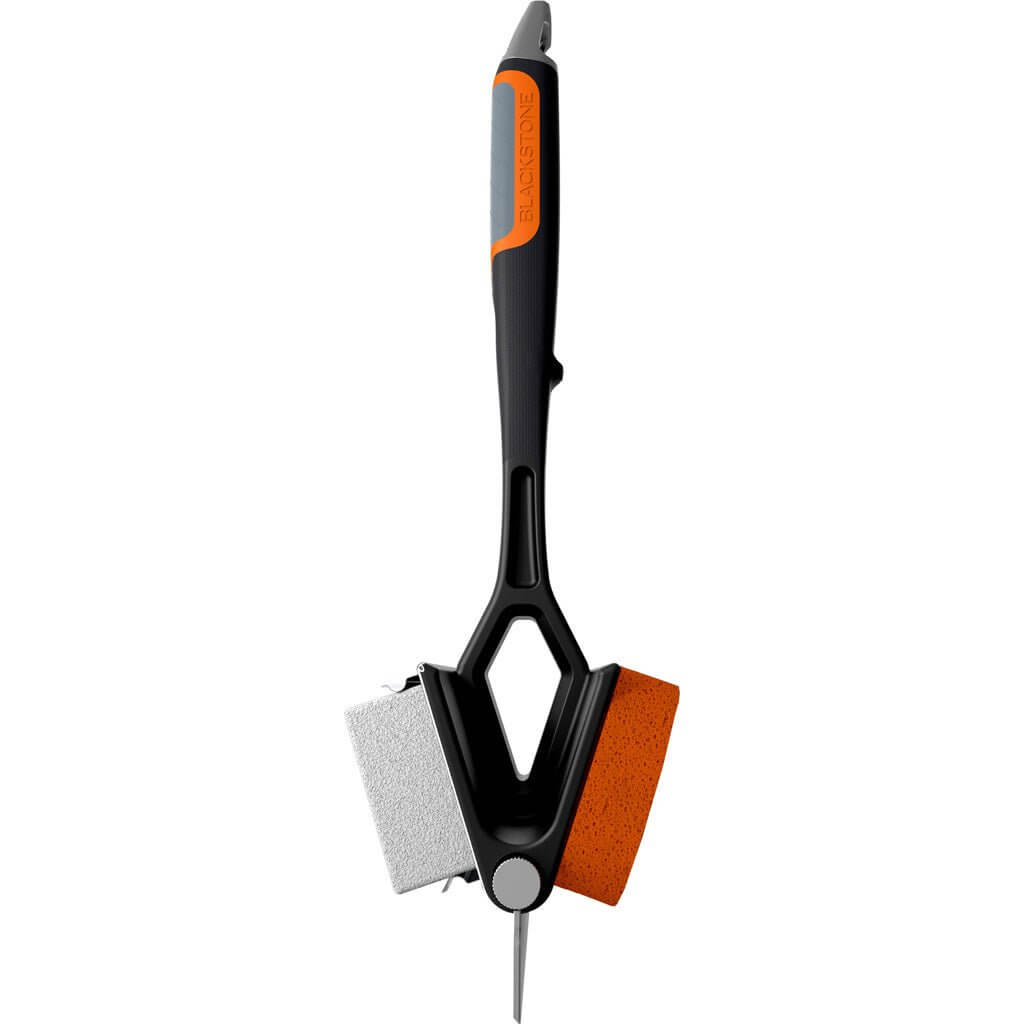
For everyday cleaning, scrape, use a little water, dry it and oil it (see mistake 7). A 3-in-1 griddle cleaning tool with scraper, scouring pad and refinishing brick covers all three jobs.
5. Seasoning by the clock on a cold or windy day
In Canada, the clock is a poor guide. Wind and cold air pull heat off the plate, so the top takes longer to reach the colour change that tells you it is ready for oil.
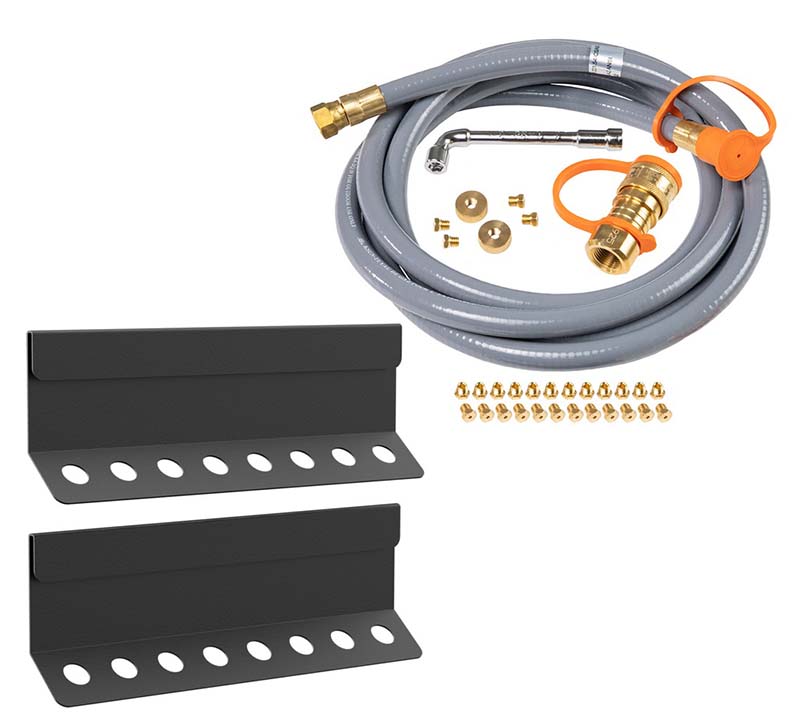
Go by what you see: wait for the steel to change colour before the first coat, and wait for each coat to stop smoking before the next. If you cook in an open, windy yard, block the wind. KS carries a natural gas conversion kit with wind guards for owners switching off propane.
6. Forcing the edges black with extra oil
Pale edges after seasoning are normal. Blackstone’s manual explains that corners and edges sit away from direct burner heat, so they darken more slowly. Dumping extra oil on them to catch up only builds thick, sticky rims. Keep coating them thinly between cooks; the manual says the seasoning evens out over several cooks.
7. Flooding the hot top with water
Cleaning with a lot of water undoes seasoning and can damage the plate. The manual says to let the griddle cool below 300°F, work in sections about 6 inches wide, and use no more than two tablespoons of water at a time. It also warns never to pour cold water across a whole hot griddle, which can warp the top.
Finish every clean by drying the top completely and wiping on a thin coat of oil. That last step is what keeps the surface non-stick between cooks.
8. Skipping the oil coat in humid or coastal weather (Blackstone griddle rust)
Bare steel plus moisture equals rust, and rust is rough enough to grab food. Blackstone’s manual warns that owners in humid or coastal climates may need to season more often and use heavier oils.
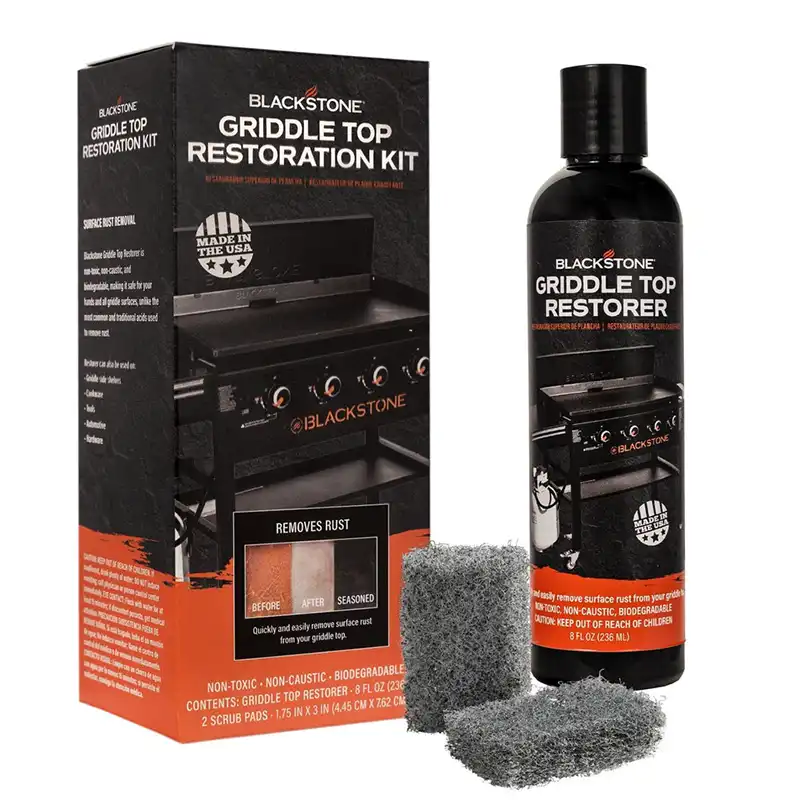
If rust has already started, the manual’s fix is steel wool, low-grit sandpaper or a pumice stone, then a full re-season. The griddle top restoration kit is built for that job.
9. Leaving it uncovered or untented over winter
A Canadian winter is where most seasoning is lost. Blackstone’s manual says to always cover a griddle stored outdoors and to “tent” a soft cover with a bowl or ball in the middle so water runs off instead of pooling on the top. Owners report what happens without it: rust over winter in Quebec, and mould on the lid of a BC griddle left unused for the season.
Cover it and close the lid. A protective griddle plate cover for 28 and 36 inch tops, or a silicone protection mat for tops up to 22 inches, adds a layer under the outer cover. See all griddle covers and cases.
How to re-season a Blackstone that is already sticky
A sticky top does not need stripping to bare metal. Blackstone’s manual gives a short recovery for tacky or blotchy seasoning:
- Turn the griddle to high and let it heat for 10 to 15 minutes.
- Scrape off as much of the thickened, half-cooked oil as you can.
- Re-season with a very thin layer of oil or conditioner.
- Leave the heat on until the coat stops smoking, then repeat with another thin coat if the surface is still uneven.
For rust or flaking down to bare steel, sand or scrub the affected area first, then season it as if it were new: 3 to 4 thin coats.
Frequently asked questions
What if I seasoned my Blackstone wrong?
You can fix it. Heat the top on high for 10 to 15 minutes, scrape off the soft oil, and re-season with thin coats until each one stops smoking. Bad seasoning is a layer on top of the steel, not damage to it.
How do I tell if my Blackstone is seasoned properly?
A properly seasoned top is evenly dark, smooth to the touch once cool, and not tacky. Each coat stopped smoking before the next went on. Lighter edges are normal early on and even out over several cooks.
What happens if you don’t season a Blackstone?
Food sticks and the steel rusts. Blackstone’s manual says seasoning gives the top its stick resistance and protects against rust and corrosion. A new griddle ships with only a light protective oil coating, not a cooking surface.
Why won’t my Blackstone season?
Usually the coats are too thick, the heat is turned off before the smoke stops, or wind is keeping the plate from reaching full temperature. Thin coats and patience solve most cases.
Should I oil my Blackstone after each use?
Yes. Blackstone’s cleaning steps end with a thin coat of cooking oil after every clean to maintain the seasoning and protect the top. Wipe it thin; a thick layer turns sticky.
What is the first thing you should cook on a Blackstone griddle?
Anything, once the first 3 to 4 seasoning coats are finished. The only rule is not to use bacon as a shortcut for the seasoning itself.
Can I ruin my Blackstone griddle?
Sticky seasoning, flaking and surface rust are all recoverable. The bigger risk is warping: Blackstone’s manual warns that cold water poured across a hot top, or a large load of frozen food, can warp it.
Keep your griddle cooking clean
Most sticking comes down to two habits: thin coats, and heat left on until the smoke stops. Get those right, protect the top through winter, and the surface improves with every cook.
Restock your griddle care before the next cook
Blackstone conditioner, scrapers, cleaning tools and covers for every griddle size, in one order.