A plug-in infrared garage heater works when you need heat on you: at the bench, in a workout corner, or in the spot where you sit. It fails when you ask it to warm a whole cold garage. The same rule applies outdoors. On a covered, wind-sheltered patio it takes the chill off an evening. On an open deck at -15°C it can’t do much.
This guide explains why, so you can tell which side of the line your garage or patio falls on before you buy. For the wattage and circuit side, see our guide to 240V vs 120V garage heaters.
How does an infrared garage heater work?
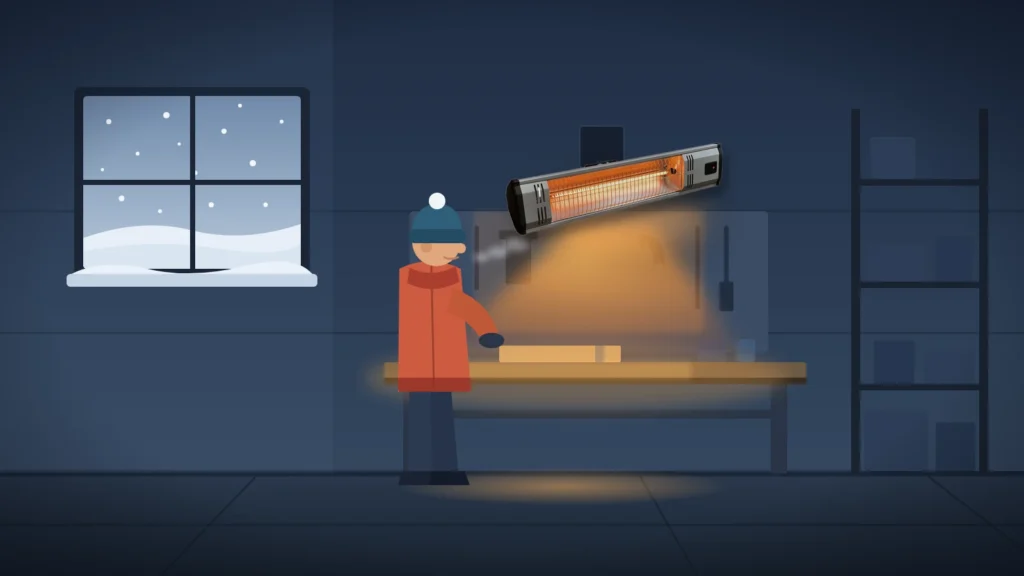
An infrared heater sends out radiant heat in a straight line, the way the sun does. It warms the first thing it hits: you, your jacket, the bench, the tool in your hand. The air in between stays cold. A fan heater works the other way around. It warms the air and counts on the air to warm you.
That difference has three effects in a Canadian garage:
You feel heat quickly, because nothing has to warm the room first.
Opening the overhead door costs you less, because the heat isn’t stored in the air.
Heat only reaches what the heater can “see.” Stand behind the truck or turn your back and you’re out of the beam.
There are two limits to know. Intensity drops fast with distance, so a heater aimed at your bench does little for the far wall. And the slab, walls and door stay cold, so past the beam the garage still feels like January.
Where does an infrared heater for a garage work?
It works when the heat has a clear target. Good fits:
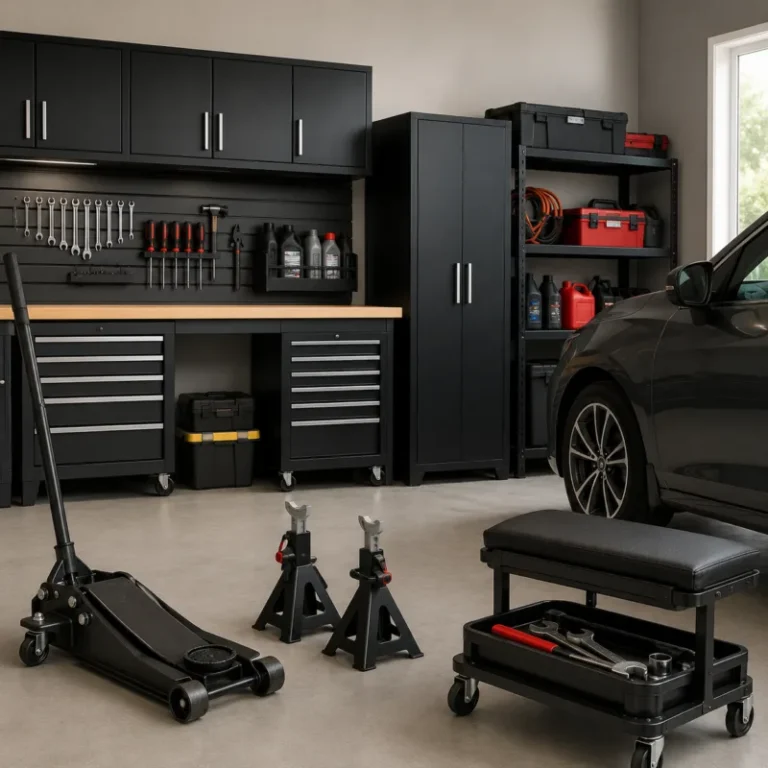
A fixed work spot. A bench, vise or sharpening station where you stand in the same place.
A seat or a corner. A workout spot, a chair by the door, a spot where you wait on glue or paint to cure.
Short sessions. A Saturday project where you want to be comfortable now, not warm the room for hours.
A garage with no 240V circuit. It plugs into an outlet you already have.
A garage where the door opens often. Radiant heat on you isn’t lost to the open door the way warm air is.
Insulation still matters. A cold concrete slab and an uninsulated door keep drawing heat out, and Canadian garage owners in forum threads keep coming back to that point. Infrared helps you work in that cold. It doesn’t change it.
Where does an infrared garage heater fall short?
Whole-garage heat in deep cold. A 1,500W plug-in gives about 5,100 BTU an hour. That’s a spot heater, not a room heater. If you want the whole space warm at -20°C, you’re shopping for a different class of heater.
A drafty or uninsulated garage as a room. You’ll read that infrared suits leaky garages. That’s true of gas-fired radiant tube heaters, which put out many times more heat and need venting and a gas line. A plug-in doesn’t have that output.
Working all over the garage. The warm zone is the size of the beam. Move around the car and you walk in and out of it.
Anything between you and the heater. A parked vehicle, a tall cabinet or a stack of boxes blocks the heat like a shadow.
Where should you mount an infrared heater in a garage?
Aim it at where you actually stand, not at the room. Mount it on the wall or ceiling, angled down toward the bench, and follow the clearance distances in the manual. Keep fuel, solvents, rags and sawdust well away from it. Plug it straight into a wall outlet with no extension cord, and keep a compressor off the same circuit while it runs.
Does an outdoor infrared heater work on a Canadian patio?
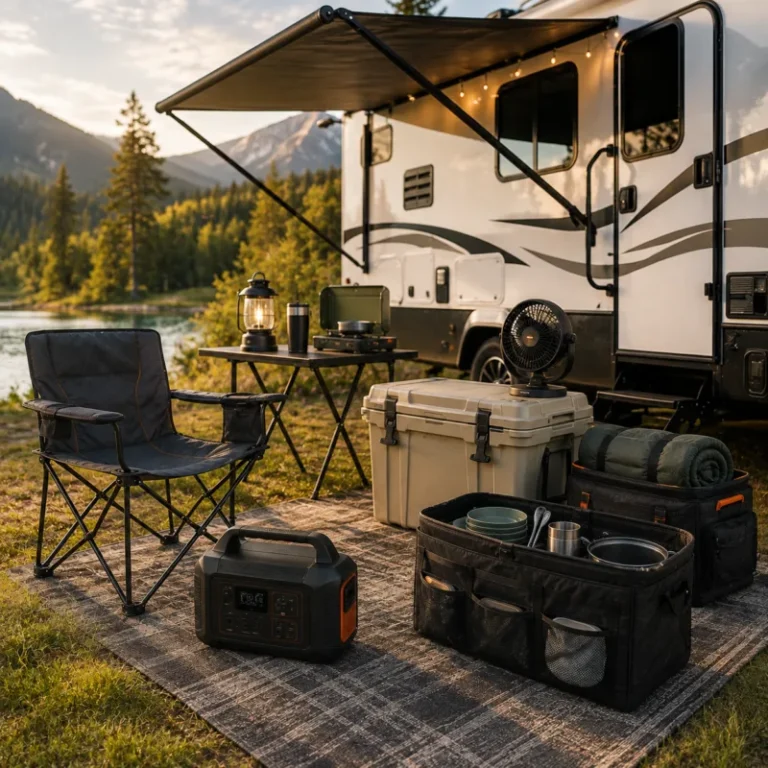
Yes, in the right conditions. An outdoor infrared heater works on a covered porch, a screened-in space or a sheltered patio, when you sit close to it and the night is cool rather than brutal. Think April to June and September and October evenings.
It works outdoors for the same reason it works in a garage. Radiant heat isn’t blown away the way warm air is. But wind still pulls heat off your skin, and a 1,500W unit warms a seat or two, not a patio.
It falls short on an open, windy deck, in deep winter, with a crowd, or under a tall open ceiling where the heat has a long way to travel.
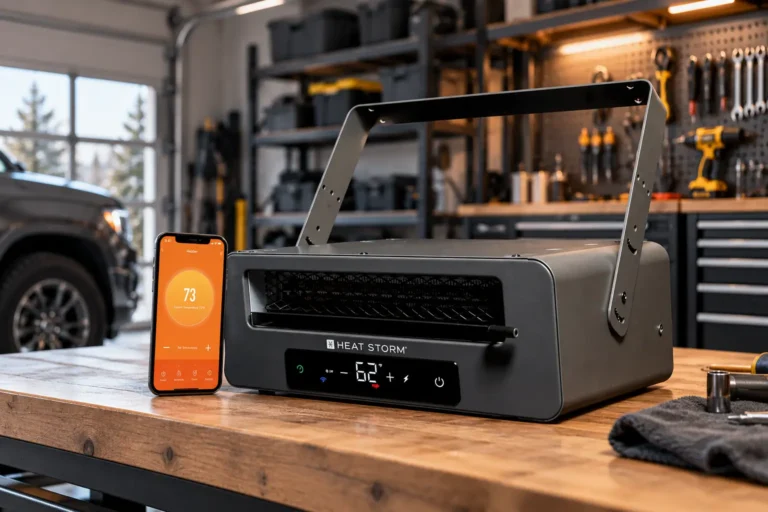
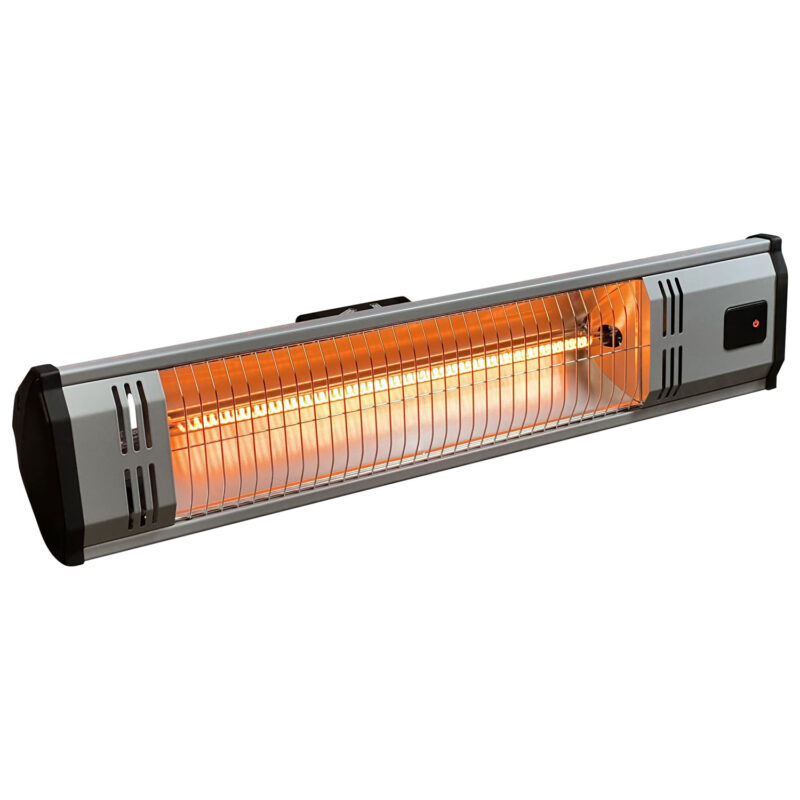
Use a heater made for outdoor use. The Heat Storm Tradesman 1,500W is sold as an outdoor infrared heater with a wall or ceiling mount and a remote. Read its manual for rain exposure and mounting rules before you install it outside.
Infrared heater: where it works and where it doesn’t
Situation
Plug-in infrared works?
Why
One person at a bench in an insulated single garage
Is an infrared heater good for a garage? It’s good for spot heat on you or your bench. It isn’t good at warming a whole cold garage. If you want the room warm, look at a 240V electric or gas unit, and start with insulation.
Can I use an infrared heater outdoors? Only one made for outdoor use. An indoor-only heater doesn’t belong on a patio, however sheltered. Check the product name and manual first.
Is an infrared heater different from an oil-filled radiant heater? Yes. An infrared quartz heater sends heat straight at what’s in front of it. Oil-filled “radiant” heaters work largely by warming the air around them, and in a cold garage that heat gets lost.
Is infrared cheaper to run? Not per kilowatt-hour. Every electric resistance heater turns nearly all its power into heat. The difference is where the heat goes. Infrared puts it on you, so you can heat less of the space and only run it while you’re there.
Heat the spot you actually use
A bench, a chair or a covered corner of the patio. Compare Heat Storm infrared heaters by wattage, mounting and weather rating.
Tammi Longstaff is Operations Manager at Kennedy Sales in Uxbridge, Ontario, the team behind KS Products. She runs fulfillment, customer service, returns and warranty, so she hears what Canadian buyers ask before and after they order. She brings 20+ years in Canadian retail and ecommerce.
To provide the best experiences, we use technologies like cookies to store and/or access device information. Consenting to these technologies will allow us to process data such as browsing behavior or unique IDs on this site. Not consenting or withdrawing consent, may adversely affect certain features and functions.
Functional
Always active
The technical storage or access is strictly necessary for the legitimate purpose of enabling the use of a specific service explicitly requested by the subscriber or user, or for the sole purpose of carrying out the transmission of a communication over an electronic communications network.
Preferences
The technical storage or access is necessary for the legitimate purpose of storing preferences that are not requested by the subscriber or user.
Statistics
The technical storage or access that is used exclusively for statistical purposes.The technical storage or access that is used exclusively for anonymous statistical purposes. Without a subpoena, voluntary compliance on the part of your Internet Service Provider, or additional records from a third party, information stored or retrieved for this purpose alone cannot usually be used to identify you.
Marketing
The technical storage or access is required to create user profiles to send advertising, or to track the user on a website or across several websites for similar marketing purposes.