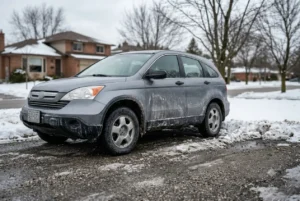


Your car is crusted white, the forecast says -18°C, and the wand bay looks like a bad idea. Plenty of Canadian drivers in that spot give up until April. You don’t have to. Winter salt removal is about timing more than effort, and the routine below works in real Canadian cold.
Rinse road salt off on the first day near or above freezing after a salt run, and at least every two weeks through winter. Use a touchless or heated bay with an underbody spray, rinse the underside longest, skip the foam brush and dry the door seals before you leave. On the coldest days, wait: salt does its damage when it’s wet.
Planning the whole season, from sealing the paint in fall to the spring wash? Start with our winter car care checklist for Canadian drivers. This guide goes deeper on one job: getting salt off when it’s below freezing.
Why does road salt still hurt your car when it’s -20°C?
Road salt corrodes a car when it’s wet. Dry salt sitting on cold metal does little, but meltwater, slush and humidity dissolve it into brine, and brine is what eats metal. The riskiest point of a Canadian winter is the mild day after a cold snap, not the cold snap itself.
Deep cold also changes what goes on the road. Rock salt slows down sharply as temperatures drop: a Wisconsin transportation bulletin notes it can take an hour for salt to melt about 3 mm of ice at roughly -12°C. At those temperatures, road crews can switch to or add calcium chloride and magnesium chloride.
Those chlorides are harder on your car. Bob Baboian, an auto industry corrosion consultant and fellow of the National Association of Corrosion Engineers, explained to the Concord Monitor that rock salt stays a dry crystal until humidity reaches about 70 per cent. Magnesium chloride dissolves at around 20 to 30 per cent humidity, so a car coated in it stays damp and keeps corroding long after the road looks dry.
When should you wash road salt off in winter?
Wash after the salt goes down and before it gets a mild, wet stretch to work in. In practice, that means the first day near or above 0°C after a storm, and at least every two weeks while the roads are being salted.
In our customer research across 950 car-care and garage threads, winter salt was the most common reason drivers raised car care at all, across 144 separate posts. A recurring plan in those threads is to give up and wait for spring. A cheaper habit also comes up: a few dollars at a wand bay every couple of weeks, only to rinse the heavy salt off. That habit is the right one.
Pick the warmest part of the day. CAA South Central Ontario suggests using the sun, warm water and a pre-warmed car to keep water from freezing while you wash, so a midday wash after a drive beats an early-morning one.
How do you wash a car when it’s below freezing?
Below freezing, the goal is a salt rinse, not a full detail. Get salt off the underside, wheels and lower panels, then get water off the places where it will freeze.
- Choose a touchless or heated bay with an underbody spray.
Consumer Reports recommends a touchless wash that covers the whole car, underbody included. The underbody option often costs extra; in salt season it’s the part you’re paying for. - Start underneath and spend the most time there.
Spray the wheel wells, rocker panels, behind each wheel and the underside before the body. CAA recommends hosing the wheel wells and everything underneath, since that’s where salt packs in. - Leave the foam brush in its holster.
CAA advises skipping the scrub brush in winter to avoid scratching your paint. - Use warm water, never hot, on glass.
CAA warns that hot water on cold glass can crack it. - Keep the wand back from seams and locks.
High pressure can push water into spots it can’t drain out of, where it sits and corrodes or freezes. Rinse door edges, mirrors and the fuel door from a distance. - Dry the door jambs and rubber seals before you drive away.
Wipe every jamb, seal and the fuel door with a microfibre towel. Water left on the seals can freeze a door shut overnight.
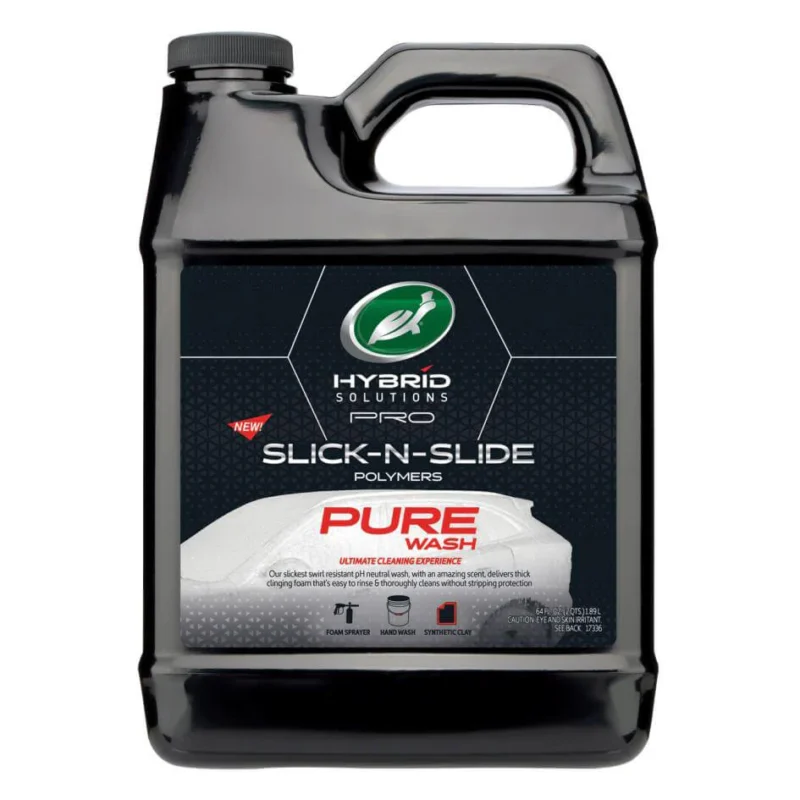
Washing at home in a heated garage? Use a dedicated car wash soap such as Turtle Wax Hybrid Solutions Pro Slick n Slide Pure Wash, work top to bottom, and squeegee the meltwater toward the drain when you’re done.
Is a heated garage good or bad for a salty car?
A heated garage makes winter washing easy, but parking a salty car in one without rinsing it can backfire. Warmth melts the slush off the car, the salt dissolves into that meltwater, and the car spends the night wet.
Canadian owners talk about this a lot: it came up in 66 separate posts in the same review. Some said friends stopped heating their garages because of rust from melting salt. Others added a dehumidifier after condensation frosted their garage door from the inside.
If you park in a heated garage, knock packed slush out of the wheel wells before you pull in, push the meltwater toward the drain, and rinse the car on the next mild day. In an unheated garage, less of that salt melts overnight, so washing on mild days matters more than where you park.
Still deciding how to heat the garage? Our comparison of 240V vs 120V garage heaters walks through the choice. Whichever you pick, plan for the meltwater as well as the heat.
How do you get salt stains out of car carpet and mats?
Salt stains are dried salt left in carpet fibres. Plain water mostly moves them around. A 50/50 mix of white vinegar and warm water dissolves the salt so you can lift it out.
Vacuum the loose salt first. Spray the vinegar mix onto the stain, let it sit for a few minutes, scrub with a stiff brush, then blot with a dry towel or pull the moisture out with a wet/dry vacuum. Keep the solution away from any wiring or electrical connections under the carpet. The vinegar smell fades as the carpet dries.
If stains keep coming back, a foaming carpet cleaner and a brush do the same job with more scrubbing power. Turtle Wax Power Out Carpet & Mats heavy-duty cleaner is built for exactly those two surfaces.
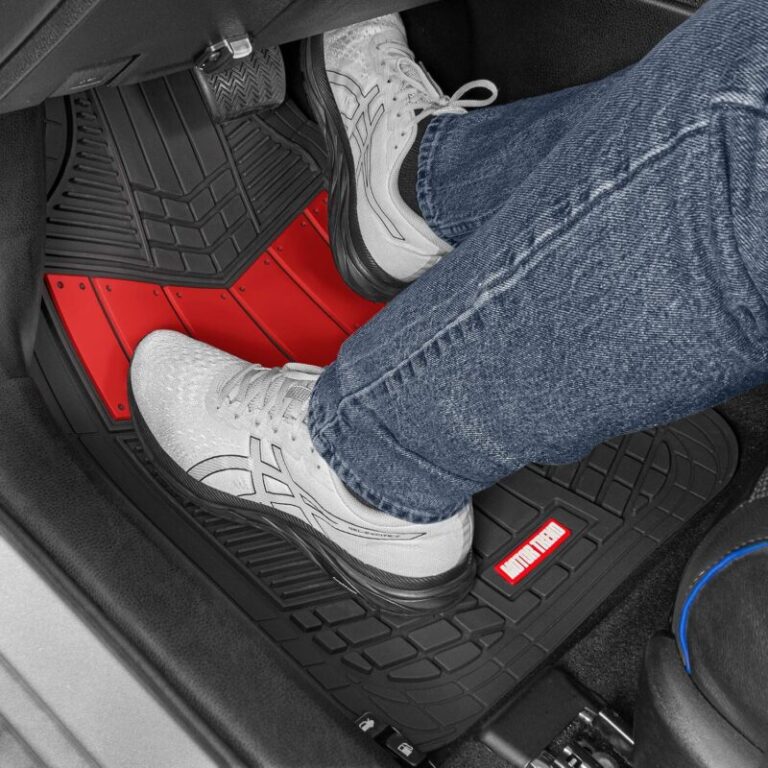
Prevention is easier than cleanup. Several Canadian drivers in the same review swap to rubber mats for winter specifically to keep salt out of the carpet. Mats with raised ridges, like the BDK 4-piece heavy-duty universal mats, hold slush in place until you can dump it.
What protection helps between winter washes?
Protection doesn’t stop salt from landing on your car. A wax or spray sealant puts a layer between salt and paint and makes the next rinse more effective.
Apply a spray sealant on a mild, dry day before heavy salt season. Canadian owners in detailing forums commonly report reapplying spray sealants every three to six months, so plan on at least one top-up before spring. One honest note: a ceramic spray such as Turtle Wax Hybrid Solutions Ceramic Spray Coating is a sealant made with ceramic ingredients. It’s not the same as a professionally installed ceramic coating, and Canadian detailers are quick to point that out.
The underside needs its own plan. Many Canadian owners book an oil-based rust-proofing treatment every fall or every other fall, then rely on underbody rinses to keep salt from building up between treatments.
The cold isn’t what wears your car down over a Canadian winter. The thaw is. Rinse the underside on mild days, dry the seals before you park, and keep salt out of the carpet, and your car comes out of April in the shape it went into November.
Stocking up before the next storm? Browse the Turtle Wax range at KS Products for car wash, sealants and interior cleaners.